


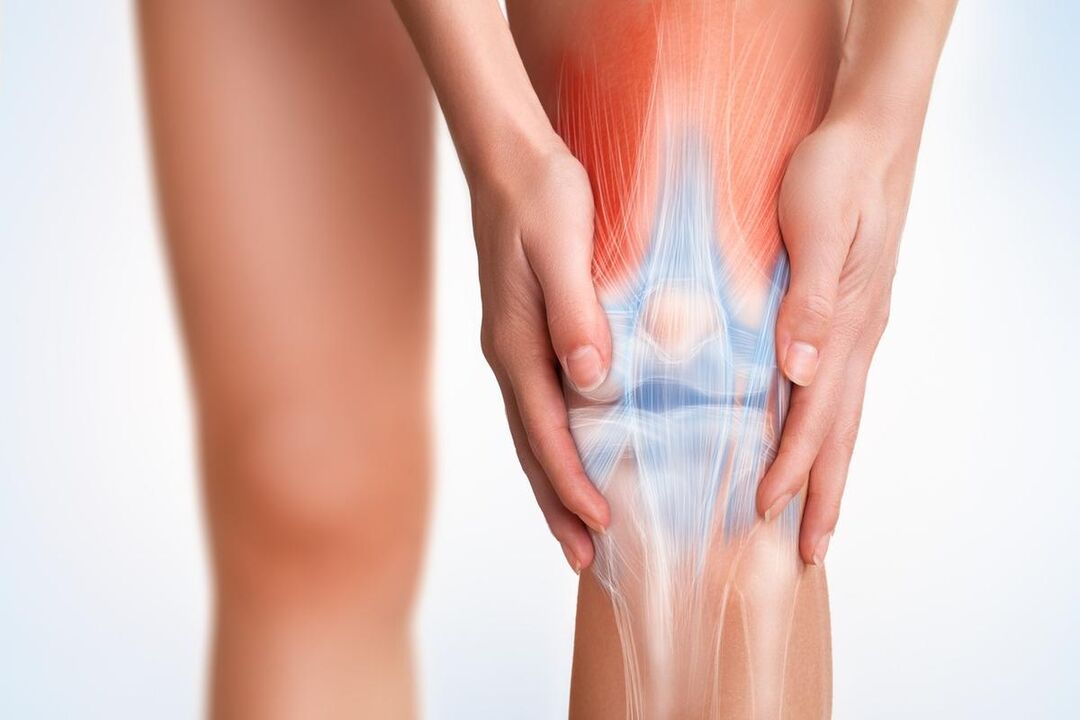
Joint pain (arthralgia) is an important symptom in the diagnosis of many diseases.She was the first to say that serious changes had begun to occur in the joints of the bones.
Typically joint pain occurs without swelling, curvature, severe pain on palpation, or redness.Significant restrictions on mobilitybig jointThe patient had no complaints either.It's also possible that even an X-ray won't show signs of inflammation.But that doesn’t mean joint pain is innocentsymptom:It can signal serious organic pathology or even disease unrelated to the condition of the joint itself.
According to statistics,painexisthand jointsTwo out of every 40 people over the age of 40 started experiencing leg problems.For people over 70,diseaseDiseases of the musculoskeletal system are more common - accounting for 90% of cases.
causes of joint pain
one of the mainreasonThe problem is infectionacuteInfect.painPain may occur before the first symptoms of the disease appear and in the early stages.If infection occurspain all joints of body.They retain liquidity.
after infectionsharpYou may experience joint pain if:
- genitourinary tract infections;
- Intestinal diseases.
Other causes include: secondary syphilis, tuberculosis, and endocarditis.It may also occur if the body has chronic infections—in the bile ducts, kidneys, pelvic organs, and parasitic infections.Broken joints.
Arthralgia (joint pain) often confirms the presence of a rheumatic disease.In this case, the pain syndrome is associated with changes in weather conditions.More often, patients experience severe discomfort in the large joints of their lower limbs.In the morning, he was unable to get up and walk quickly due to joint pain and stiffness.
If the pain is episodic, occurs unexpectedly, worsens during the day, and lasts for several days,whineGouty arthritis (accumulation of uric acid crystals in joint structures) may be suspected in only one joint.
If the pain increases very slowly, affects large joints that bear stress (most commonly the knees or hips), worsens with physical activity and/or is accompanied by morning stiffness, it can be assumed that osteoarthritis (formerly known as osteoarthritis), a degenerative dystrophic process in the joints, has developed.
Common causes of joint pain:
- Thyroid pathology;
- weather dependence;
- heavy metal poisoning;
- frequent physical harm;
- long-term use of certain medications;
Classification of joint pain
There are many classifications of joint pain.According to positioning standards, it can be divided into the following categories:
- Monarticular pain (affecting only one joint);
- Oligoarthralgia (paindifferent at the same timejoints - but not more than five);
- Polyarthralgia (discomfort in more than 5 joints of the body).
Additionally, joint pain can be generalized or localized, given the location of the joint.Depending on the nature of the lesion, the pathology can be non-inflammatory or inflammatory.
Pain manifested by diseases of the musculoskeletal system is usually divided into:
- Beginning (appears at the very beginning of the movement);
- Mechanical (consequences of exercise, long walks, running);
- Reflection (pointing out in areas where there are actually no pathological changes);
- Nocturnal activity (disturbed during night rest).
Other joint pain may include:
- blunt and sharp;
- permanent and temporary;
- Weak, Moderate and Strong.
Postinflammatory pain and pseudoarthritis are divided into separate groups.
Diagnosis of joint pain
to understandWhy do my leg joints hurt?Doctors put patients through a series of diagnostic procedures.First, perform a lab test:
- General blood tests.Deviations can be detected taking into account the nature of the joint injury and its severity.An increased erythrocyte sedimentation rate confirms the presence of inflammation, whereas a normal leukocyte count is a hallmark of rheumatic pathology.On the contrary, if the white blood cells are elevated and pain in the spine and individual joints predominates, the nature of the disease is likely to be infectious.
- Blood chemistry tests.For joint inflammation, they will check for levels of C-reactive protein, fibrinogen, total protein, serum mucusoid, diphenylamine reaction, and a few other indicators to confirm a rheumatic disease diagnosis.
In addition, the following checks can be specified:
- Radiography.This is mandatory for painful joints, since without photos the doctor cannot make a differential diagnosis and assess the degree of damage to the skeletal system.
- Computed tomography.Used to study the location of inflamed areas.
- Immunoelectrophoresis.Another type of diagnosis that shows how spread your rheumatoid arthritis has spread.
- Arthroscopy.During the procedure, a specialist will visually examine the structure of the knee joint and take tissue samples from the required areas.
- Radionuclide scan.Effective in the early stages of joint disease.
- Arthrography.The doctor injects a special contrast agent into the joint (no contrast agent may be used).Changing the initial picture gave him the opportunity to determine whether there were affected parts of the joint in hard-to-reach areas.
A biopsy will be performed if the doctor deems it necessary.
Treat joint pain
treatJoint pain will only be effective if your doctor identifies the cause of the symptom and determines what disease it indicates.To relieve inflammation, patients can be prescribed:
- Chondroprotectant.They slow the progression of osteoarthritis, prevent further destruction of joint cartilage, and reduce inflammation.An example of a drug from this group is a combination drug containing two cartilage components, namely chondroitin and glucosamine substances in therapeutic doses, chondroitin sulfate 1200 mg and glucosamine 1500 mg, in the form of capsules.These ingredients activate the cartilage regeneration process, so that the pain gradually disappears and the patient's condition improves.
- NSAIDs.Eliminate pain and prevent the spread of inflammatory reactions.Normalize body temperature.
- Muscle relaxants.Designed to minimize stiffness in skeletal muscles.
- Antibacterial drugs.For use in septic arthritis.
- Vitamin and mineral complex.Vitamins A, E, C and the B complex are necessary for normal function and rapid recovery of joints.Selenium, calcium, etc. are also important.
- Hormones, steroids.They are used if joint inflammation is severe and medical treatment is not effective.
Patients may be prescribed warming, analgesic and anti-inflammatory ointments along with medications, intramuscular and intravenous injections.
If the pain is unbearable, a nerve block may be performed.During the surgery, the use of strong medications helps to forget the symptoms of joint pain for a long time.
Other ways to treat joint pain include:
- physical therapy;
- massage;
- manual therapy;
- mechanical therapy;
- Use special equipment for joint traction;
- diet.
Physical therapy procedures are available for patients who:
- shockwave therapy;
- ozone therapy;
- Phonophoresis;
- Muscle stimulation and a few others.
surgical treatment
In complex cases, it is not possible to eliminate discomfort in one or more joint areas using non-invasive methods.The patient is then recommended for surgery.It may be:
- Arthroscopic debridement.The surgeon will make tiny incisions and use them to remove dead tissue from the joint space.The surgery involves the use of modern endoscopic equipment.
- puncture.Doctors use special needles to drain the accumulated fluid from the joints.
- Periarticular osteotomy.To take the load off the affected joint and increase its mobility, doctors file the joint bones so that they grow together at an angle.
- Endoprosthesis.This is a very serious surgery and is only used if the joint can no longer be restored.The prosthesis is then fitted.
Doctors will consider age, medical history, symptoms, and a number of other factors to determine the appropriate treatment for joint pain for a specific patient.
prevention
To avoid joint damage, you need to pay maximum attention to proper nutrition.Your daily diet should contain all the necessary vitamins and minerals.Junk food should be avoided.You need to drink about 2 liters of clean drinking water every day - this has a positive impact on the functioning of the musculoskeletal system.
Equally important is:
- Do not overcool;
- Live an active lifestyle;
- break bad habits;
- Sleep at least 8 hours a day;
- Take regular walks in the fresh air;
- Avoid staying in one position for long periods of time.
If you do experience joint discomfort, you will need to get checked out.You should not self-medicate if you suspect an inflammatory process.